

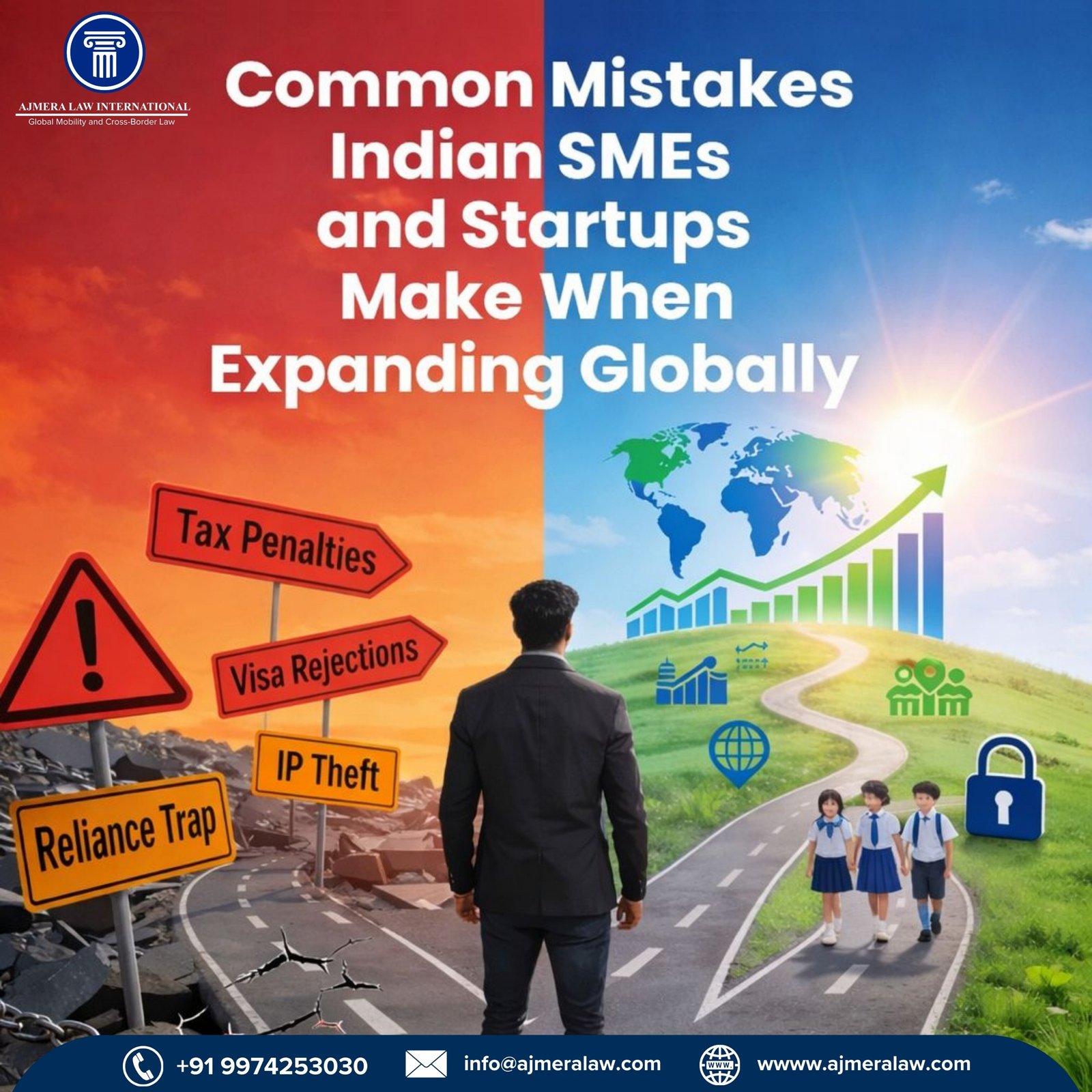
Common Mistakes Indian SMEs and Startups Make When Expanding Globally
Indian small and medium enterprises (SMEs) and startups often dream big about going global. They pursue international expansion for compelling reasons: scaling business operations worldwide, enhancing their global brand image, or relocating for superior children’s education and quality of life. However, many stumble due to poor preparation and misguided advice.
Why They Go Global
Entrepreneurs eye three primary drivers:
- Global Business Expansion: Accessing larger markets, diverse customers, and revenue streams beyond India.
- Building a Global Image: Boosting credibility to attract investors, partners, and talent.
- Business and Family Relocation: Seeking better schools, healthcare, and lifestyle for the next generation.
These ambitions are valid, yet execution falters without expert guidance.
The Reliance Trap: Wrong Advisors
Few Indian professionals are equipped for cross-border complexities like international visas, tax treaties, or entity setups. Instead, founders turn to:
- Unqualified agents promising quick fixes.
- Online searches yielding out dated information
- Family and friends abroad offering anecdotal tips.
This shortcut leads to costly pitfalls, undermining long-term goals.
Key Mistakes and Consequences
- Incorrect Legal Structure: Choosing wrong entities (e.g., branch vs. subsidiary) triggers tax penalties, compliance failures, or ownership issues.
- Limiting Legal Options: Rushing into one visa path (e.g., investor visas) closes doors to talent-based routes like startup or skilled worker programs.
- Prioritizing Cost Over Value: Opting for cheapest agents ignores tailored strategies, resulting in visa rejections or suboptimal business models.
- Ignoring Tax and Compliance Risks: Overlooking double taxation, transfer pricing, or local regulations leads to audits and fines.
- Underestimating Cultural and Market Fit: Failing to adapt products/services culturally or validate demand wastes resources.
- Neglecting IP Protection: Launching without securing trademarks/patents abroad invites copycats.
- Poor Succession Planning: Family relocations disrupt operations back home without handover plans.
These errors often mean the main objective—sustainable growth—remains unachieved.
How to Avoid These Pitfalls
Consult specialists in international law, such as those versed in different jurisdictions, Conduct due diligence on advisors via credentials and success stories. Start with pilot markets and hybrid structures to test waters. Prioritize long-term viability over short-term savings.
Global success demands strategy, not speed. Indian SMEs and startups can thrive internationally by learning from these mistakes.
Expert Assistance for Global Success
Ajmera Law International assists with options and objectives for 35 countries in association with respective law firms and professionals. Call our office at 9974253030 or email: info@ajmeralaw.com.
